home biography discography concert dates what they say...
contact photos & sounds
 

BANDS and PROJECTS - SOLO, DUOS, TRIOS, QUARTET, QUINTETS, OCTET


what they say...

Read the article "A Jazz Man Comes Of Age"

in International Herald Tribune by Mike Zwerin


"Upcoming Hurricane" No Business Records 2011


All About Jazz Nov. 2011

Free jazz trios require an instigator—someone who will incite others to action, counteraction, or response. With the trio of double bassist Pascal Niggenkemper, Simon Nabatov, and Gerald Cleaver, there are three such instigators, and on Upcoming Hurricane, these three musicians collaborate to create nearly a perfect storm.
A relative newcomer, German-born Niggenkemper invited the two veterans for this improvisation session, and as such, he is the architect of these tracks. Certainly, his bass stands up as an equal voice here, opening the disc with swirling bow work on "Pusteblume," with Nabatov's piano detonated first from the inside (strings), then with some contemplative wondering at the keys; this coming together through mushrooming energy is an appealing feature throughtout. Cleaver's scavenging work at his kit can take on "found sounds," like that of hubcaps and wind chimes, on "Fighting The Mill"; like his work in Farmers By Nature, with William Parker and Craig Taborn, Cleaver shifts from minimalist to thunderous fomenter with ease. But, then, so can Nabatov. The pianist, whose previous work with the drummers such as Tom Rainey, Paul Lovens, and Michael Sarin, can approach these interactions with the scrabble of horn player and the painter-like qualities of a stringed instrument. The delicacy of his playing balances Niggenkemper's fiery momentum and Cleaver's decorations.
The best example of this group's facility is on the nearly 12-minutes title track, where the trio builds a dense, layered, and ever-increasingly energized sound that morphs constantly into a thunderhead. The brewing tempest has Nabatov favoring left hand rumblings, Niggenkemper the reverberations of energy from bowed and plucked strings, and Cleaver a churning surge of power. It is a masterpiece of instant composition.

Mark Corroto

JazzWrap December 2011

...the new album, Upcoming Hurricane, pretty much says it all. This is a heavy storm of sound that comes on quietly but resonates brightly over 60+ minutes.

Clean, open and improvised, Niggenkemper is a brilliant performer but more importantly an astute and crafty composer and leader. Niggenkemper's idea of space, wind and earth as a theme for exploring music is embedded throughout this session.

The title track comes rolling in like a swarm of bees. The addition of Simon Nabatov (piano) provides a deeper and introspective outlook than PN Trio which was sax, bass and drums. Nabatov's free formed pounding keys intersect with Cleaver's pulsating drums and Niggenkemper's expertly dense bowed bass making for an intense listen. But it unfolds beautifully in all its clattering glory. There is a rising tempo that reaches an epic two thirds of the way through that you have to really hold on tight because things could get out of hand. And suddenly all three musicians release you as if you were never there.

"Arbol de piedra" reverses the setting. It's a piece with a lot of space and room for each member to interpret freely. Cleaver touches around the outside of Nabatov exploratory notes. While Niggenkemper floats in and out of the melody with dreamlike quality. It's piece that allows the listen to think a dwell and become absorbed into the spaces between the notes. 
"Fighting The Mill" is Niggenkemper's piece. ... Nabatov and Cleaver add the chaos to talented bassist's more cerebral movements on this number. The storm hits midway through as the trio goes off in different directions while somehow still holding your attention as to what the next note might be.

Exquisite execution by composer and trio.

Stephan Moore


The New York Jazz Records January 2012

Spontaneity is enhanced by inspiration. That’s what bassist Pascal Niggenkemper proves with this CD, an original take on the classic jazz piano trio, recorded in one session in Cologne. The symmetry maintained between linear harmony and fanciful abstractions demonstrated on the seven tracks is also a result of the equilibrium maintained among the bassist and his associates - sidemen isn’t the word - who singly and together have been on hundreds of records.
Detroit-born drummer Gerald Cleaver usually works with sound explorers such as saxophonist Roscoe Mitchell and bassist William Parker, although his past experience includes gigging with mainstream piano masters such as Tommy Flanagan. No slouch on the keyboard himself, Russian-born, Cologne-based Simon Nabatov is a mercurial pianist, whose extended 10-year New York stint means he’s as likely to work regularly with Americans like drummer Tom Rainey as Europeans like saxophonist Frank Gratkowski. Niggenkemper, of French-German descent though now a New York resident, is a member of several combos of unconventional instrumentation, so it’s instructive to note how his tough Mingus-styled string pops and scrubbed multiphonics fit in this traditional setting.
Very well, it turns out, since Niggenkemper gives free reign to everyone’s inventions, especially the pianist. Nabatov’s strategy for “Fighting the Mill”, for instance, involves tremolo rumbles plus strummed inner strings that mesh with woody bass rubs and off- handed syncopation. With all three playing continuously, Nabatov manages to create a lyrical narrative concurrent with skittering dynamics that would give Cecil Taylor pause.<...>

Ken Waxman


All About Jazz Feb. 2012


Since German/French bassist Pascal Niggenkemper moved to New York in 2005 he has become increasingly prominent on the contemporary scene. Alliances with Thomas Heberer’s Clarino on Klippe (Clean Feed, 2011), Joe Hertenstein’s HNH (Clean Feed, 2010), the cooperative polylemma (Red Toucan, 2011), and Jean Carla Rodea’s Azares, with whom he appeared at the 2010 Vision Festival, ensure a busy diary. Fortunately he still found time to wax Upcoming Hurricane with an accomplished multinational cast, completed by Russian pianist Simon Nabatov and American drummer Gerald Cleaver.
Natural world metaphors come easily to mind when discussing the disc, helped not only by the suggestive title, but also the organically unfolding flow spread across the seven wholly improvised cuts. In spite of the bassist's name on the marquee, it's an egalitarian affair: no-one dominates and there are almost no solos. Cleaver comes closest with a throbbing polyrhythmic barrage to close out "Fighting the mill," but even here dark piano chords add subtle counterpoint. All three are highly attuned to one another, united in unspoken synergy, whether in delicate colloquy or in furious extremis.
Niggenkemper's wiry presence holds it all together, his subterranean rumble transmuting at times into propulsive thrum, though he is at his most individual with his expressive bow work. On piano, Nabatov wields his prodigious technique judiciously for maximum effect, with a two-handed independence reminiscent of Craig Taborn (another frequent Cleaver collaborator), pitching sparkling runs against marching arpeggios on "Aeolus." Cleaver trades in indeterminate rustling noise for much of the time, recalling his expressionistic displays with Farmers By Nature, but when animated, as on the title track, his drums tumble headlong alongside a quickening cymbal fizz.
Contrasting programming ensures that the band covers a wide emotional range, from the mysterious stirrings of "Pustelblume" to the impending storm and choppy density of the standout "Upcoming hurricane." In a typical change of pace, the following "Arbol de piedra" essays spare balladry, while elsewhere the contrapuntally careering "Rahonavis" precedes "Mongolfière," initially spacey before gaining in both mass and momentum, abetted by Nabatov’s locomotive left hand. Niggenkemper has carved out a very strong outing, and raises hopes that this isn’t a one-off agglomeration.

John Sharpe

 
Toma Jazz Spain Nov. 2011

El contrabajista Pascal Niggenkemper ha estado muy activo durante los últimos meses (discográficamente hablando), participando en unas cuantas grabaciones de distintos proyectos como los tríos HNH, Minerva y Clarino, o el cuarteto Polylemma. A todas esas grabaciones hay que añadir Upcoming Hurricane, publicada a su nombre por el sello lituano NoBusiness Records en la que le acompañan el pianista Simon Nabatov y el baterista Gerald Cleaver.

Los tres músicos forman una unidad orgánica que trabaja, salvo en uno de los temas, creando unas improvisaciones con tal sentido melódico que en algún momento parecen más bien temas escritos que composiciones instantáneas. En ello ayudan los dos acompañantes de Niggenkemper: el ruso Simon Nabatov es un veterano curtido en mil batallas, mientras que Gerald Cleaver es un todo terreno con una gran hoja de servicios.

Por encima de otras consideraciones resalta la gran variedad que presenta la música que aparece en esas improvisaciones: abstracta en un momento, puede ser lírica en el siguiente, alternando en el mismo tema una gran intensidad con el sentido de ligereza que aportan los espacios. Incluso alguno de los temas finaliza con un tremendo groove. El trío maneja con maestría las transiciones entre esos momentos tan variados.

El siguiente elemento a considerar son los músicos, artífices de lo anterior gracias a sus magníficas maneras. Estas no se hacen patentes únicamente en sus solos, sino sobre todo gracias a la interacción entre los tres, que no cesa en su búsqueda en ningún momento. El resultado de su arte es una magnífica grabación de improvisaciones libres que no obvian su vertiente melódica.

Pachi Tapiz

 
Scrivere di Jazz Nov. 2011

Il nome ne rivela le origini europee ma il contrabbassista, franco-teutonico, Pascal Niggenkemper  oggi è cittadino newyorkese e musicista rappresentativo di quella metropoli dove è  arrivato nel 2005 per proseguire i suoi studi al Manhattan School of Music con Jay Anderson grazie ad un premio DAAD concesso quell’anno dal governo tedesco  e dove ha conseguito successivamente il Diploma Master in Music Performance.

Scrivo di lui perché mi è pervenuta da qualche settimana la sua ultima produzione discografica che segna un’altra tappa importante nella sua attività, da sempre intensa, malgrado i trentatreanni della sua giovane età, che lo ha visto membro della Henry Mancini  Institut di Los Angeles nel 2006 nonché componente di gruppi  di musicisti a fianco di Maria  Schneider, Vince Mendoza e Gonzalo Rubalcaba. A New York,  Niggenkemper è già stato parte di un trio con Robin Verheyen e Tyshawn Sorey, mentre in questo cd, uscito a settembre per l’etichetta NoBusiness, lo ritroviamo con Simon Nabatov al pianoforte e Gerand Cleaver alla batteria. Due musicisti dediti a frequentazioni d’avanguardia e quindi in ideale sinergia con la tendenziale scelta musicale che anche il contrabbassista ha operato in questi ultimi anni. La sobrietà della copertina che accompagna il cd dà già un’idea di ciò che le sette tracce da lì a poco esprimeranno ovvero un’essenzialità jazzistica che non concede nulla all’estetica formale e che invece risulta fortemente votata ad instaurare una fitta interazione.

Il dialogo  si esplica a volte attraverso un  dilagante e magmatico  incedere nervoso, che ha in Cleaver un esaltante dispensatore di ritmi africaneggianti, altre volte creando scarni ambiti dialettici pervasi da reminiscenze classiche europee di cui il pianismo di Nabatov è intriso. In entrambe le condizioni Niggenkemper si mostra non solo a suo agio ma anche stimolato con tutto il suo preponderante campionario inventivo che lo strumento gli consente di esprimere senza dimenticare di rivelare, che ancor prima di dedicarsi al contrabbasso, è stato in tenera età pianista e violinista. Con cotanta dote innata e con il contributo di musicisti come Nabatov e Cleaver, Niggenkemper, ha realizzato una delle produzioni più interessanti di questi ultimi mesi, oltretutto, disponibile anche in vinile.

Giuseppe Mavilla


All About Jazz Italy Dec. 2011

Upcoming Hurricane, l'uragano che sta arrivando, è quello che prende forma dalle dita, dalle mani e dai piedi di Pascal Niggenkemper, Simon Nabatov, Gerald Clever. "Pusteblume" è l'attesa. L'archetto manovrato da Niggenkemper sfrega le corde del contrabbasso, stridori e dissonanze vagano per l'aria alimentando una tensione sottile ma palpabile. Nubi minacciose all'orizzonte, la calma apparente, i silenzi che si intrufolano tra le corde, sparuti trilli acuti e acuminati provenienti dal pianoforte di Nabatov preannunciano un cambiamento imminente e devastante.
Che puntualmente arriva con la title-track, la natura sprigiona tutta la sua potenza, gli elementi si scatenano in un sabba irrefrenabile, le dita di Nabatov scorrono frenetiche sulla tastiera come spinte da una forza invisibile, le pelli e i metalli percossi da Gerald Cleaver irradiano un pulviscolo ritmico in moto perpetuo, lo spazio e l'atmosfera sono attraversati da convulsioni e fremiti asimmetrici che, in coda, si trasformano in inaspettata scansione binaria.
Poi la quiete dopo la tempesta. In "Arbol de piedra" (il riferimento è a formazioni rocciose presenti in Bolivia che modellate dal vento assumono le sembianze di alberi) il tempo sembra fermarsi, poche note distillate dal pianoforte, qualche leggero pizzicato del contrabbasso, le spazzole che strisciano leggere lasciando un senso di vago e di indefinito. Con "Aeolus" i venti tornano a soffiare, non così impetuosi come in precedenza, ma capricciosi, irriverenti, quasi si divertissero a creare scompiglio tra gli strumenti e i loro sorpresi interpreti.
Upcoming Hurricane, registrato al Loft di Colonia in un pomeriggio di primavera del 2010, è disco dalle tinte forti e senza compromessi. Tre musicisti in stato di grazia (sorprendente l'abilità strumentale e compositiva del giovane contrabbassista tedesco, già note quelle dei suoi compagni di viaggio) danno vita ad una registrazione dove si combinano mirabilmente pieni e vuoti, irruenza e dolcezza, libertà e coerenza.

Vincenzo Roggero


Jazz a credit

Intéressante session d’improvisation entre deux grands improvisateurs et un jeune contrebassiste sur cette petite étiquette lituanienne publiant ses albums en série limitée (dans ce cas, seulement 300 exemplaires). 2 longues pièces de 11 minutes et 5 pièces plus petites. Les musiciens alternent entre le silence, la délicatesse et la fureur, le plein de notes car c’est parfois très rapide, dense et free. Lorsque les trois musiciens s’éclatent (comme sur Hupcoming Hurricane, la pièce phare du disque par son ascension et sa fragilité), le piano est omniprésent, Nabatov appuyant lourdement sur les touches, cascadant comme lui seul sait le faire. Lors de ces passages, il devient plus difficile de cerner la contrebasse, elle devient presque un instrument à percussion tellement Niggenkemper pince les cordes pour y sortir du son. Par moment, l’archet sera utilisé lors des pièces plus silencieuses. À la batterie Cleaver est un maître des nuances, des pinceaux, de la force et de la polyrythmie. Trois musiciens à l’écoute l’un de l’autre dans un free bien mené, pas trop aride, juste ce qu’il faut. Belle exploration sonore entre le déchirement, la contemplation, la vitesse, la tempête, la terre ferme, l’envol, le calme…

Maxime Bouchard


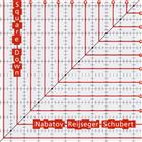
"Square Down" Leo Records LR 607 2011


Jazzreview.com October 2011 *****


Three European improvising heavyweights align for an intriguing expansionist endeavor, where space, dainty subtleties, and asymmetrical underpinnings aid the organic and polytonal output of the band's multifarious developments. With orbital and darting exchanges, the trio also delves into minimalism and free-microtonal interludes amid gradually climactic choruses.
"Run For It," is one of the shorter pieces on the album, but serves as a prime example of the trio's uncanny combination of introspection and aggression. Here, pianist Simon Nabatov and saxophonist Matthias Schubert generate dips and spikes via weaving dialogues to summon a rather ominous string of circumstances. However, they throttle back and explore slopes and sharp turns, abetted by cellist Ernst Reijseger's wily phrasings and sinuous backdrops. And the band runs on various speeds and metrics while intensifying the impact with scorching 3-way improvisational segments. Yet they inject soulful inflections to lighten the load with an elusive and liquefying mode of attack.
As a whole, the album moves forward with the force of rapidly advancing waves to complement the rather pliant musical architecture. No doubt, they project a stress test for the mind, contrasted by cunning rebuilding processes and trickling passages that are akin to a calm-before-the- storm approach to overall course of action.

Glenn Astarita


The New York Jazz Records January 2012

<...> Reijseger rejoices in home territory on Square Down by an egalitarian trio completed by gifted Russian pianist Simon Nabatov and German saxophonist Matthias Schubert. Mercurial interaction holds sway across six spontaneously generated cuts as egos are checked at the door in a magical three-way exposition drawing on extended techniques. Reijseger plucks and bows with unfettered abandon, contrasting creaking tonal flexibility with his singing classical technique. Nabatov spends as much time inside the piano as out, which makes his freewheeling keyboard forays stand out all the more while Schubert’s slobbery susurrations and hoarse multiphonics evolve into rapidly articulated sonic cascades. Preternaturally responsive, they wheel and twist like flocking birds, leaderless but united. Their interplay dazzles in its dexterity, speed and depth of feeling.

John Sharpe


Jazz Podium December 2011

Seine 12. CD bei Leo Records hat Simon Nabatov in Köln aufgenommen, seit vielen Jahren sein Wohn- und Schaffensort, wo viele seiner außergewöhnlichen Arbeiten entstanden sind.
Zwei besondere Gäste dabei, der Amsterdamer Cellist Ernst Reijseger, in Köln gerne und oft erlebte Virtuose, und der frühere Kölner Saxophonist Matthias Schubert, der schon lange einer der Exponenten der deutschen Szene der aktuellen improvisierten Musik ist.
Scheinbar löst sie sich auf, die Musik, verliert sich in randlosen Gängen, die ohne Ende zu sein scheinen. Aber immer wieder kommen die drei Musiker zusammen.
Es ist wie in der Bildenden Kunst, in der die Abstraktion nie zur Auflösung geführt hat, sondern zu ganz neuen Ausdrucksformen jenseits der üblichen Gegenständlichkeit.
Und die neuen Bilder entstehen eher spontan, getrieben von der Kraft, gelegentlich durch Nachdenklichkeit unterbrochen.
Voller emotionaler Ausbrüche ist diese CD mit ihren sechs Stücken von „Long haul“ über „Run for it“ bis zu „Plangent cry“ (kann man fast wörtlich nehmen).
Drei Meister der freien Ausdrucksformen in der aktuellen Musik!

Hans - Jürgen von Osterhausen

 
Bad Alchemy 71 - 2011

Vom Roundup-Quintett der letzten LR-Veröffentlichung des Pianisten SIMON NABA TOV sind bei Square Down (LR 607) nur MATTHIAS SCHUBERT mit seinen Tenor­saxergüssen und ERNST REIJSEGER mit seinen Celloeskapaden geblieben. Statt den impressionistischen und launig-tänzerischen Akzenten des Quintetts, steht hier erstmal 'Long Haul' auf dem Programm, eine Viertelstunde turbulentes Rumgetobe. Schubert knurrt, schnaubt, spaltzüngelt und feuerspuckt wie ein brünftiger Drachen. Der volu minöse Pianist hämmert und meiselt, was das Zeug hält. Erst bei 'Genostasis' wird abgeregter geschliffen und gepfiffen, mit Lauten, die der niederländische Cellist schon vorbereitete, als er wie ein Theremin klang oder eine Pikkoloflöte. 'Run For It' ist dann ein von ihm angeführtes klassisches Ding, zugleich sanglich und sportlich. Bei 'Chapter And Verse' wird, halb animalisch, halb elektronisch, in Noise gestöbert. Slapstick pur, mit Innenklaviergebrumm und Mäusepfiffen, und Schubert schlürft und schrillt kopfüber im Blecheimer. Aus dem dann, opulent und vollmundig melodiös, spritzige Erfrischung geschöpft wird, in die das Cello jaulend glissandiert, Klänge, die man doch wirklich nicht ohne Strom erzeugen kann, oder? Für 'Plangent Cry' liefert Reijseger innenklavier beharften Wohlklang, aber auch ein dopplereffektvolles Summen, das in rhythmische Motive mündet. Aus einer träumerisch zerstreuten Passage entwickelt sich wieder ein temperamentvoll animierter Schweinsgalopp hin zu einem langen, wieder geräusch verliebten Ausklang. 'Giant Lips' sprintet dann ins Ziel, als aufgekratzt sprudelndes Accelerando bis hin zum letzten Ping. 53 Minuten? Es kam mir kürzer vor. [BA 71 rbd]

Rigobert Dittmann


Altrisuoni Blow Up September 2011

Un power trio che la natura ha condotto per necessità a suonare insieme. Tensione creativa perenne, attimi di rilassatezza ricercati al solo scopo di ripartire verso nuovi e sempre differenti scuotimenti. Il piano di Simon Nabatov sa muoversi con eleganza prima di colpire a fondo con rapidità felina. Il cello di Ernst Reijseger perde o acquista l’aura classica a seconda del momento, sospeso tra abrasività e suoni concilianti. Il tenore di Matthias Schubert ama i battimenti sofisticati ma sa esplodere in una nuvola di vitalità quando la situazione lo richiede. Una prova riuscita per tre navigati e non ancora sazi esploratori dell’infinito.

Piercarlo Poggio


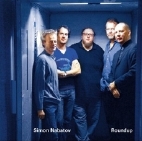
"Roundup" Leo Records LR 586 2010


Cadence May 2011


The latest release from the dazzling pianist Nabatov is a bit of a changeup from his recent work, as many of his releases for Leo have focused on his inspirations in literature (the Bulgakov set was particularly memorable). On this release Nabatov continues to explore somewhat similar musical terrain—huge technique that wends its way through bop-derive languages and new music territories in the context of semi-structured play—but does so with greater space for texture and a more free-wheeling approach to harmony. Over the course of a couple evenings at Cologne's venerable LOFT, Nabatov and his longtime colleagues play with great detail and exuberance, flirting with genre (the samba gestures of "Sunrise, Twice," for example) and freedom alike, seamlessly. Instead of long-form conceptually driven suites, the band uses each piece to explore at length a single idea or written fragment. With such invention as these improvisers are capable of, things never seem thin or underdeveloped. Just listen to the nuance Nabatov and Rainey coax from a simple drone and near silence on "Career Ladder," which purposefully avoids expressionism in favor of minimalism. That is, until the riotous five-part rhythm machine that is the main theme emerges. Subtle and brash alike, craggy and fluid, these themes are protean in a way that suits perfectly these improvisers' strengths. From the dense, soaring "Stuck for Good" and "Low Budget" to the restraint of "Now What" and the dancing "Desfile," this is state of the art stuff.

Jason Bivins

"Jazz Podium" December 2010

Allein die Besetzung kann schon mit der Zunge schnalzen lassen: Simon Nabatov (p), Nils Wogram (tb), Matthias Schubert (ts), Ernst Reijseger (cello) und Tom Rainey (dr). Das steht für ein Maximum an kreativer Energie und Integrationskraft, für die Gleichzeitigkeit von Chaos und Kosmos, für Farbe, Form und Offenheit, für die individuelle Entfaltung und dienliche Zuordnung. Für seine elfte Leo-CD hat sich Simon Nabatov zum 50. Geburtstag eine echte musikalische Sternstunde gegönnt, seinen liebsten Partnern sieben Kompositionen anvertraut und diese zu einem subtil entrückten, lebendigen Gesamtkunstwerk vereint. Bei aller improvisierenden Frische und schöpferischen Kraft überwiegen die leiseren Töne, der pastellfarbene Hauch und die produktive Balance einer runden Zwischenbilanz, die mit sich im Reinen ist, zugleich in keiner Sekunde Müdigkeit vorschützt. So einzigartig bewegend kann die Lebensmitte sein. Kein Zweifel!

Tobias Boecker


Moment's Notice December 2010

The Russian-born, German-resident pianist Simon Nabatov has demonstrated tremendous breadth as a performer, from witty improvised duos with Han Bennink to earthy post-bop bands with Ray Anderson. He's added his own voice to the works of Herbie Nichols and crafted both vocal settings and tone poems on Russian literary works. Here Nabatov leads an international quintet in a series of pieces that testify to his sometimes startling imagination, for Nabatov is traditionally, even romantically, lyrical, and just as capable of developing machine-like power and collective frenzy. At times the lushly-set melodies here give the impression of a Gil Evans orchestra (shades of Ellington, Mingus and George Russell arise as well), making it all the more impressive that he's playing with a quintet, though a very special group of musicians - trombonist Nils Wogram (a frequent Nabatov collaborator), tenor saxophonist Matthias Schubert, cellist Ernst Reijseger and drummer Tom Rainey. It's a great band and a fine match for Nabatov's impulses, the opening "Sunrise, Twice" matching his music-box piano against Wogram's continuous drone and Rainey's at once sparse and lively snare drumming. As compelling as the opening is, though, it's Nabatov's ability, a matter of both technique and conception, to keep growing an idea beyond where you think it can go, developing lacy dissonances before the piece gently disappear into itself. There's even more movement in "Career Ladder", which grows from eerie dialogue to roller-coaster momentum. The contrasts of the opening pieces develop again and again here, as Nabatov's lyrical reflections give rise to dense exchanges and sudden theme statements. There's a brilliant collocation between composed structures and collective improvisation, resulting in a kind of structured turmoil. The musicians move in and out of Nabatov's overlapping patterns with both fierce energy and control, and you get the sense that each member of the group is simultaneously assuming several roles, as disciplined (and reading) sideman, empathetic member of a community, and independent improviser. This is highly distinctive and valuable work.

Stuart Broomer


Vortex Jazz Club  November 2010

Much that needs to be said about some recordings can be conveyed simply by listing their personnel, such is the distinctiveness and originality of the participants; this album, featuring a quintet led by Simon Nabatov, is one such. Nabatov himself is a restlessly inventive, virtuosic pianist, capable of the most delicate lyricism, rollicking wit and thundering vigour, as required; trombonist Nils Wogram brings to this most human-sounding instrument a rare degree of subtle eloquence, softly crooning one minute, pleasantly blurting the next; Matthias Schubert is a master of textural variation, sculpting sounds rich in emotive power from his tenor; Ernst Reijseger has been setting the bar for resourceful improvised cello for decades; Tom Rainey might have been specially created for musical situations such as this, adept as he is at bringing an emphatic, confident muscularity to ostensibly free music and thereby bringing out all the subtleties of structure buried within it. Nabatov's music on "Roundup" ranges from the tinklingly/sparklingly delicate to brawling free-for-alls (a contrast epitomised by the juxtaposition of' 'Desfile' and 'No Doubt' at the end of the recording), touching most bases between for good measure, but it coheres courtesy of the sheer energy, commitment and mutual responsiveness of his world-class band. Recommended.
Chris Parker


AllAboutJazz November 2010

"Sunrise, Twice" - ROUNDUP

With venerable band mates generating a sympathetic framework, Russian-reared/New York City-based pianist Simon Nabatov re-fabricates ambiances into slightly fragmented story lines on the superb Roundup. Featuring semi-structured tone poems spiked with dissonance, budding grooves, and intriguing dialogues among the players, Nabatov opens with a transcendent melody on "Sunrise, Twice."

The pianist's cascading chord voicings and trickling right-hand patterns spawn a gradual shift to a faintly ominous vibe, treated with swirling choruses and rhythmic clusters. Underscored by trombonist Nils Wogram and saxophonist Matthias Schubert's dissonant contrasts, "Sunrise, Twice" morphs into an ascending deconstruction via extended notes and intersecting sub-themes. Finalizing the piece on a hauntingly harmonious note, this is just the beginning of Nabatov 's truly captivating endeavor, engulfed in a cavalcade of polyrhythmic perspectives and fascinating exchanges by the players. A masterfully inventive pianist, Nabatov drills his fluid thought processes and clever inventions into the broad realm of modern-day jazz and improvisation.

Glenn Astarita 

Touching Extremes December 2010

The initial Sunrise, Twice - cellist Ernst Reijseger and trombonist Nils Wogram depicting a slow parabola under the leader's melancholic figures - is already deserving of a mention among the classics. But Simon Nabatov won't stop there: he's indeed one of the few piano virtuosos around that doesn't need to flex his technical muscles, preferring paths that lead to diverse embodiments of harmonic consciousness. The quintet, completed by Matthias Schubert on tenor sax and Tom Rainey on drums, enlivens the listening environment through comprehensible difficulties, each instrument furnishing a glorious contribution to a healthy combination of rationality, sentiment and - when necessary - bedlam. On the other hand, the principal's huge sensibility throws everything that's unnecessary out of the house when the moment is appropriate: Stuck For Good is permeated by a mixture of dissonant impregnability and profound reflection, the latter explicated by emotional passages that recall the earlier work of Rainer Brueninghaus with Eberhard Weber while touching an entirely different set of inner strings in those who listen. This juxtaposition of instrumental nimbleness and alleviating, if pensive serenity - not forgetting a touch of irony - corresponds to the concrete foundation of this superb release, ended by the beautiful ballad No Doubt, which sounds like a contemporary standard that nevertheless would have made Glenn Miller proud.
Massimo Ricci


AllAboutJazz Italy December 2010

For his fiftieth birthday and his eleventh recording for Leo Records, the pianist and composer of Russian origin Simon Nabatov  packs a strong punch. Here we find all the elements that led Nabatov to the Olympus of pianism in the modern music: the prestigious academic background, the refined touch, the overflowing virtuosity which never surrenders to pure exhibitionism, interest in various forms of the vanguard, the improvisational spirit imbued with great melodic sense, innate curiosity towards new and greater challenges.

But Roundup highlights even more the writing abilities of the great pianist -  Nabatov strings in a row seven compositions perfectly tailored to this unique quintet setup; from the first to the last one they show the qualities of the real classics. There is a perfect balance between a sense of narrative, the capacity of the true storyteller, a syntax full of "accidents", the unexpected, of furious collective improvisations as well as clean lines, minimalist mantra-like sequences, as well as dissonance.

The initial "Sunrise, Twice" is built on crystalline cascades of notes from the piano, a sort of eerie music box that feeds a climate of agonizing waiting, a kind of "Desert of the Tartars" music. "Career Ladder" is embodied by a collective improvisation that slowly but surely comes together and flows into a splendid ensemble of organized chaos. The final "No Doubt" is a timeless ballad that warms the heart with a few strokes bedded with wisdom, infused by a subtle tension that constitutes the decisive factor. And between those bookends -  a string of pearls to be discovered, listening after listening. The musicians are all on top of their game, but Ernst Reijseger deserves a special mention - he, as always, manages to penetrate the heart of the performances to bring out the hidden aspects and characterize them with a touch of genius.

Vincenzo Roggero

Jazz a credit

Simon Nabatov est un pianiste né à Moscou en 1959. Il émigre avec sa famille à New York en 1979 et va étudier à la Julliard School of Music. Il réside maintenant à Cologne en Allemagne. Depuis son émergence en tant que musicien jazz, on peut l’associer à l’avant-garde jazz, un jazz composé avec des “règles”, mais où l’improvisation débridée est très présente. Il suffit de regarder son imposante discographie pour se convaincre de l’étendu de son talent et de ses intérêts musicaux. Ses collaborations couvrent un large spectre, de l’hommage à Herbie Nichols en passant par la musique brésilienne, de l’octet au trio en passant par le quatuor, etc. Roundup est son 10e album chez Leo, enregistré afin de célébrer son 50e anniversaire de naissance en décembre 2009 lors d’une série de 4 concerts.

Cet album nous propose 7 compositions du pianiste dans une sorte de romantisme free. Les pièces débutent lentement, avec introduction d’un ou quelques motifs servant d’ancre pour des lentes progressions harmoniques avant l’éclatement. Le piano répète des motifs simples sur lesquels les cuivres improviseront avant de revenir sur le thème. Il y aura de fortes improvisations, le saxophone et le trombone s’amusant en contrepoint ou de front ensemble. Chaque composition part de sa propre idée ou “procédure” avant d’être élaborée par l’ensemble dans l’improvisation. La polyphonie et la dissonance seront au rendez-vous tandis que Nabatov fustige le piano parfois délicatement, souvent intensément avec des grosses chordes et des cascades. Il rappelle une myriade de styles et de pianistes d’horizons différents (post-bop, classique, free). C’est une musique en ascension constante avec des brisures ici et là après maints paroxysmes. Le violoncelle apporte un caractère “chambré” tandis que la batterie de Rainey se place du coté avant-jazz avec sa folie habituelle syncopée, rapide, franche. Un excellent album m’ayant charmé du début à la fin.

Maxime Bouchard


JAZZthing November 2010 - January 2011

...die Besetzung hält, was die verspricht. Mit einem kaum zu übertreffenden Sinn an Dramatik inszeniert der Pianist heroische Klanglandschaften.

Wolf Kampmann

The New York Jazz Record November 2011

...a wonderfully subdued new quintet session from the Russian pianist Simon Nabatov...
As always, Nabatov’s pieces are satisfying little gems, precisely realized movements, which range from moody piano settings supported by Ernst Reijseger’s cello to upbeat, jazzy tunes with the sax and trombone of Mathias Schubert and Nils Wogram, respectively, at the fore.

Kurt Gottschalk


JAZZTHETIK 11+12. 2010

...Sie spielen ausschließlich Stücke des hochvirtuosen Pianisten Nabattov, die von einer verträumt-bedrolichen Stimmung, verblüffender Interaktion und rhythmisch-harmonischer Raffinesse leben.

Rolf Thomas


Jazzflits Holland November 2010


Op je vijftigste kijk je eens hoe je ervoor staat. Dat wil de titel "Roundup" uitdrukken. Pianist Simon Nabatov stelde een topkwintet van getrouwen samen om het heuglijke feit te vieren: trombonist Nils Wogram, saxofonist Matthias Schubert, cellist Ernst Reijseger en drummer Tom Rainey. Het vijftal kent elkaarvan haver tot gort, en stoeit heerlijk met een zevental composities van de hand van de leider. En daarin staat het een en ander genoteerd, maar is er ook voldoende ruimte voor improvisatie.Want de heren zijn meesters in het switchen tussen de ene en de andere discipline. Gezamenlijk zorgen ze voor bijzonder rijke muziek, die vol zit met haast ondraaglijke naar een climax aanzwellende melodieen en pakkende grooves. Maar ook met ontregelende momenten, waar schoonheid bruut wordt verstoord door knallende klankexploraties. Er is aangrijpende lyriek (die soms Leo Cuypers-achtige vormen aanneemt), instrumental acrobatiek en pure verstilling waar bij ieder geluidje met spanning de aandacht vraagt om te horen waar het heen gaat. Het publiek in de Keulse Loft (waar het optreden vorig jaar werd opgenomen) moet een heerlijk avondje hebben gehad.

Herman te Loo

Cultura-Portal

Единомышленники


Новоджазовый пианист родом из Москвы, эмигрировавший в Нью-Йорк в конце 1970-х, а спустя еще десятилетие переехавший в Кельн, Симон Набатов – человек мира. Одиннадцатый его компакт-диск на авторитетном британском лейбле “Leo Records” вышел под названием “Roundup”. В этом проекте, посвященном 50-летию Набатова, юбиляру удалось собрать прогрессивных единомышленников – музыкантов евроджаза: тенор-саксофониста Маттиаса Шуберта, тромбониста Нильса Вограма, виолончелиста Эрнста Рейзегера и барабанщика Тома Рейни. В Москве Набатова знают: в октябре 2003 года он был специальным гостем на пятилетии московского трио “Второе приближение” в ММДМ, в декабре 2005-го играл в дуэте с Нильсом Вограмом в клубах Петербурга и Москвы. Более того, российским любителям нового джаза Набатов известен по главным своим работам, апеллирующим к нашей отечественной литературе ХХ века: Михаилу Булгакову, Даниилу Хармсу, Иосифу Бродскому. Вместе с тем Набатов прочно укоренен в западной культуре, о чем свидетельствует длинный список его творческих контактов (среди прочих в нем числятся Чет Бейкер, Пол Моушн, Кенни Уилер, Фил Минтон, Мишель Годар, Хан Беннинк, Фрэнк Гратковски).


В свое время Симон Набатов учился в Центральной музыкальной школе и Московской консерватории, затем в нью-йоркском Джульярде. Академическое образование очень чувствуется и в его манере игры, и в его музыке (на диске все семь композиций – его авторства). У него замечательное туше, отточенная фортепианная техника и, хотя сам он говорит, что старается как можно дальше отойти от классического мышления, в его музыке довольно много выписанного текста и специфически композиторской работы. Уход от академизма очевиден в подчеркнуто неклассическом типе развития: большинство пьес построено на едином дыхании и представляет один мыслеобраз, одну идею. Такой тип мышления близок минимализму, в частности американскому, отголоски которого в фактурах Набатова нередко слышны.

Вереница композиций с диска “Roundup” – это своего рода постмодернистское путешествие, в котором новоджазовые музыканты ведут за собой слушателей по территории стилей – от минимализма и неоромантизма до сонорного авангарда. В условиях постмодерна, когда чистая музыка не в почете и что-то принципиально новое в этой области невозможно даже теоретически, зато в моде теория о конце времени композиторов, Симон Набатов придумывает изобретательные, интересные структуры. Он сочиняет и играет композиции, где всегда в какой-то мере присутствует “воздух” импровизации, и, пожалуй, для постмодерна его музыка слишком эстетична. Скажем, в первом треке “Sunrise, Twice” картина солнечного восхода рисуется модально-сонорными фактурами фортепиано, произрастающими, подобно протуберанцам, из первоначального светоносного до мажора. Этот длящийся мажор в партиях коллег Набатова впоследствии деформируется – как грани церквей на полотнах Аристарха Лентулова, а модальность фортепиано все более приближается к сонористическому звону, и, кажется, в условно взятое абстрактное пространство излучаются волны звукосвета. Все это – красота не в духе постмодерна.
А вот ирония Набатова вполне в духе нашего постмодернистского времени. Во втором треке начальное хаотическое движение музыкальных атомов постепенно образует цепную реакцию, название этой пьесы – “Career Ladder” (а завершается “Карьерная лестница” мерцающими “потусторонними” звучностями у рояля). Столь же ироничен пятый номер “Low Budget” (“Недостаточный бюджет”) с соло барабанов.
Нельзя сказать, что Симон Набатов в этом своем проекте безусловный лидер: его коллеги по ансамблю создают музыкальную материю с ним на равных, периодически проявляя себя в сольных высказываниях.

Irina Severova


"Moods and Modes" NWOG-Records 002

JazzThing 87 January 2011

Die zwei passen zusammen wie Topf und Deckel. Nils Wogram, schlau-genialer Alleinerbe des Posaunen-Reviers von Albert Mangelsdorff, und Simon Nabatov, verrueckt-genialer Elfenbein-Expressionist ohne festes Hoheitsgebiet, haben sich vorgenommen, gemeinsam Stimmungen und Formen zu kreieren. Zum fuenften Mal mittlerweile - was allein schon Beachtung verdient. So etwas impliziert einen gewissen Grad der Vertrautheit, des Einander-Zulassens, Detailwissen ueber die Staerken und Schwaechen des anderen. Vieles geschieht bei Wogram und Nabatov laengst im unterbewussten, reflexartigen Bereich. Im Gegensatz zu einer alten Ehe haben sich die beiden jedoch zum Glueck eine gewisse Rest-Unberechenbarkeit bewahrt, die eingefahrene Rollenspiele immer wieder neu definiert. Sie verblueffen einander, sprinten, treiben, bohren, kriechen, tupfen, hauchen, treiben Schabernack, zerfransen Themen, laufen auseinander, um sich nach unendlichen Schleifen wieder zu finden. Faszinierend dabei die transzendentalen Faehigkeiten des Posaunisten und des Pianisten, die haeufig erahnen, was der andere gerade im Schilde fuehrt, und den fremden Gedanken noch vor dessen Ausfuehrung kontern. So etwas ist verdammt schwer, klingt aber bei Wogram und Nabatov verblueffend leicht. Grosse Improvisationskunst!

Reinhard Koechl

Jazzdimensions 2011


Trotz der Ecken und Kanten, die in die Musik von "Moods & Modes" eingebaut sind, ist hier alles im Fluss, ist spröde und doch harmonisch, bewegt sich aufeinander zu und entfernt sich. Hier sind Könner am Werk, die wissen, mit den Mitteln ihrer musikalischen Kunst effektiv umzugehen. Wildheit ist hier vor allem technisches Können und Beherrschung der Mittel. Die Anarchie ist beider Ding nicht.
Das vorliegende Album ist bereits die fünfte gemeinsame CD-Veröffentlichung der beiden. Wogram und Nabatov wissen, was sie aneinander haben und voneinander wollen. In einer klar definierten Tradition des Jazz ist "Moods & Modes" ein souverän und hochvirtuos eingespieltes Album.


Michael Freerix


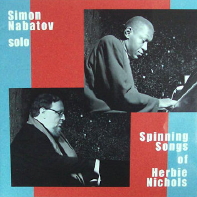
"Simon Nabatov plays Herbie Nichols" PanRec 003 2010


Touching Extremes November 2010

Simon Nabatov is a gentle bear of a man who seems to struggle a bit when forced to put the quintessence of music and inspiration in plain words. But, when turning to the piano keyboard, his fingers do all the necessary talking, shutting an enraptured audience up in the process. A child prodigy born in Moscow in 1959, Nabatov is a classically trained instrumentalist, a phenomenal technique gradually developed in long years of study at prestigious schools such as New York's Juilliard. Once in the Big Apple, suddenly young Simon's horizon began to expand and include myriads of different interests and influences (one of the most important being Paul Bley). Having to choose, he dedicated himself to jazz and improvisation completely, ultimately starting a career that has seen him performing with a literal who's who of illustrious names: Paul Motian, Kenny Wheeler, Phil Minton, Han Bennink, Misha Mengelberg, and many others.

Nabatov became interested in Herbie Nichols's work by listening to Mengelberg's interpretations and to trombonist Roswell Rudd, a pupil and collaborator of the influential composer (largely famous for penning the evergreen ‚"Lady Sings The Blues". In this concert, recorded at Cologne's Loft in 2009, the pianist tackles that and other songs by the same author - among them, ‚"2300 Skiddoo", "Twelve Bars" and the magnificent "Terpsichore"‚- with disciplined fervor and impressive harmonic command. In the short segment (added as a bonus feature in the DVD) where the Russian explains his improvisational concept, he refers to a kind of ‚"mental library" of elements to draw from when the occasion is right and to the alertness maintained during the impromptu analysis of the tunes, in order to catch every suggestion ‚"with the aerials raised". This is very clear to see over the whole set: the hands don't play a wrong note throughout, and their owner's face is a joy to contemplate in its alternance of closed-eyes smiles and ecstatic strenuousness.

The film - shot by Plush Music and produced by Hayden Chisholm - masterfully shifts the focus from theartist's physical and technical expressions to the insides of the instrument, finely emphasizing the character of Nabatov's logically zealous renditions while giving us a chance of watching the soul of a sensitive musician exposed. This gentleman has made the search for the perfect equilibrium between thrill and sophistication a raison d'étre. This full hour of awesome playing combines the best of two worlds, the notion of virtuosity - an unpronounceable word in these days of inaudible scrape-and-hiss and artificial posturing - associated to the performer's ever-cogent infatuation for the material. Nichols, who died prematurely in 1963 of leukemia, is certainly nodding a convinced approval.

Massimo Ricci

Jazz Podium December 2011

... Sensibel und dominant, perkussiv und melodiös fließen musikalische Gedanken Nichols' wie das Lebenselixier des Kammerjazz aus dem Körper von Simon Nabatov, der die Aufregung und die Kultiviertheit dieser Musik wie eine plastische Skulptur zu illustrieren weiß.

Klaus Hübner


Jazzthetik December 2011

"... Mitscnitt eines Konzertes, in dem Simon Nabatov dem Jazz-pianisten und - komponisten Herbie Nichols Reverenz erweist.... es macht Vergnügen, das Tastengenie Nabatov brillieren zu sehen und zu hören..."

hAltma


All About Jazz Italy December 2011 *****

Fin dalle prime note si capisce chiaramente che questo concerto in solitudine del talentuoso Simon Nabatov ha qualcosa di speciale e di unico. Il suo svetta come il migliore omaggio discografico che nell'ultimo decennio il jazz ha dedicato ad Herbie Nichols. Chi meglio del virtuoso pianista russo avrebbe potuto rappresentare il lato "oscuro" della logica compositiva nicholsiana, fatto di echi atonali e bartockiani?
Il repertorio, di per sé, ha un'aura fascinosa dal valore artistico intatto e tutto da (ri)scoprire, se si considera che capolavori come "2300 Skiddoo" e "The Third World" passarono inosservati da parte di pubblico e addetti ai lavori.
È rarissimo oggi riscontrare una pratica improvvisativa fluida ed efficace come quella di Nabatov. Il suo obiettivo è la trasformazione armonica dei temi, che così diventa il parametro prioritario della sua musica. Tecnica superlativa e fantasia traboccante sono al servizio di un processo altamente destrutturante, dove entra in scena un approccio totale al pianoforte. Ecco che le melodie boppeggianti di Nichols si caricano di note infuocate su tutti i registri con una condotta iperattiva.
In questa abbondanza sonora c'è anche spazio per concentrarsi sulla bellezza delle composizioni originali, che talora Nabatov accarezza con un tocco caldo e morbido magari reiterando con ostinati brevi cellule di note. Rispetto alla musica in sé, la visione del concerto aggiunge ancora emozioni rispetto all'ascolto sonoro grazie ad una comunicativa diretta e contagiosa.

Maurizio Zerbo


"A Few Incidences" Leo Records LR 446 2005


All About Jazz May 2005

....Jazz and poetry collide in a much more dramatic and daunting way on this recording by staggeringly gifted Russian pianist Simon Nabatov, always challenging himself and listeners by working on the borders of jazz, classical and improvised musics.

Nabatov takes as his launching point the surreal and often violent poetry of Daniil Kharms, one of many victims of the Soviet State under Stalin. For Nabatov, Kharms symbolizes the artist who resists all that is conventional and, in particular, the apparatus of the state. It is the third of the pianist's settings of Russian writers - he's also done Brodsky and Bulgakov - and he once again finds a personal and adventurous way to "interpret" the text. The poet here is voiced by the inimitable Phil Minton, who uses a vast array of vocal techniques to enrich his reading of the poetry. Together with what was formally Nature Morte - also including Nils Wogram and Frank Gratkowski - Nabatov marshals the forces of cello, bass, drums and live electronics. The music ranges from raucous to meditative with a world of emotional states in between. The players combine in different groupings and constantly suggest a sense of inventive playfulness even when the poetry is troubled. A revelation is "The Start of a Very Nice Summer's Day", on which out of a brooding and ominous introduction blooms a haunting and pointed ballad. The band plays in unison and is then joined by Minton speaking Kharms' ironic text. As Stuart Broomer suggests in his notes, Nabatov's music makes vital and necessary the beauty in the darkness."

Donald Elfman

Jazz Review

Pure genius. The augmented line-up on this disc puts Nabatov's uncompromising piano even further into the background, but it's a far more satisfying conception and performance.

Brian Morton

DMG Newsletter April 2006

For each of the six discs that Mr. Nabatov has done for the Leo label, he has used a different number of collaborators, from solo, duo (w/ Han Bennink), trio, quartet, quintet (Mark Feldman, Robertson, Helias & Rainey) and here is his octet project with a stellar and diverse crew. 'A Few Incidences' is in memoriam to Nikolai Dmitriev and based on texts by Daniil Kharms. Well-recorded live at Loft in Cologne in April of 2004. Phil Minton's often ridiculous and hilarious vocal antics just one part of this marvelous, creative and well-balanced octet. After a brilliant opening section of subtle electronics, twisted vocals and the minimal, thoughtful ensemble parts, they launch into some intricate charted territories. They use "free" segments at well-placed punctuation between the fragmentary charts. This is truly progressive jazz, with a seamless yet invisible connection between the written and unwritten areas. Absolutely bewitching.

BLG

one final note March 200

...Here, Nabatov turns to the writings of Daniil Kharms, an early 20th Century underground Soviet writer who created works that ranged from skewed children's poems to dark short pieces that share an absurdist sensibility similar to authors like Beckett or Ionesco (though he pre-dated both.) The pianist has cultivated a group of musicians well-versed in his strategies and this time he fills the ensemble out to an octet. Minton, Gratkowski, and Wogram return, and cellist Ernst Reijseger, bassist Matt Penman, and drummer Michael Sarin are added. But the real master-stroke is the inclusion of Cor Fuhler on live electronics and keyolin (a keyboard-driven violin invented by Fuhler) to broaden the timbral range.

With this crew, Nabatov is able to assemble settings that move freely from jazz-based forms to blizzarding counterpoint to collective improvisation. These are orchestrated frameworks that are then collectively deconstructed and dynamically reassembled. Nabatov cannily uses the text as signpost and compositional element, rather than simply creating musical set pieces. There are sections where Minton's readings of the text are central and others where his lithe scat and vocal extremes simply hint at the underlying text.

But each of the musicians can dive in at any moment to shadow or comment on the text. Wogram's braying smears, Gratkowski's searing reed playing, and Fuhler's skittering electronics are all perfect foils for Minton. The leader uses his piano to block out the direction and forms, but never boxes in the constantly morphing pieces. He is aided here as well by Penman and Sarin, who know how to propel the improvisations with implied pulses and constantly shifting momentum.

The group can fly in to querulous cacophony only to slip in to tight hocketed lines that ping-pong around the ensemble. There are even flashes of lushness, making the most of the string section to fill out the ensemble sound, or opening up for Minton's crooning voice that wells along, riding right at the edge of wild abandon.  Wrapping things up, Fuhler stretches and warps a recording of a Russian actor reading one of Kharms "children's" poems. He refracts and blurs it in to static against the jumpcut swagger of the ensemble, sounding like he is pulling in a signal from deep space and finally scumbling it into stuttering blasts of noise. As good as Nabatov's previous recordings are, this one eclipses them all and should not be missed.

Michael Rosenstein

Jazzzeitung 2006/06

...Eindeutiger Höhepunkt dieser kleinen Auswahl ist das Simon Nabatov Octet der mit A Few Incidences und Musikern aus der Spitzengruppe des aktuellen Jazz, zum Beispiel Phil Minton, Nils Wogram, Ernst Reijseger, Frank Gratkowski oder Cor Fuhler die Texte seines Landsmanns Daniil Kharms wie für das Theater inszeniert. Kharms außergewöhnliche und oft surreale Texte geraten in Mintons Händen zu bühnengleichen Auftritten, bei denen sich seine Ideen in ebenso poetische Stimmen der anderen Solisten verwandeln, zum Beispiel bei dem Saxophon von Frank Gratkowski, ganz nah an dem Ausdruck der menschliche Stimme.

Ein Meisterwerk!...

Hans-Jürgen von Osterhausen

DUSTED REVIEWS 2006

Simon Nabatov is a dazzling jazz pianist whose insane technique and compositional creativity have long been matched by an intriguing tendency to synthesize genres (and not just musical ones). Having made his reputation playing in the trio format with Mark Helias and Tom Rainey, Nabatov has since the late 1990s branched out to experiment with text-based projects. His initial foray was with Joseph Brodsky's Nature Morte, followed up by the splendid variations on Bulgakov's Master and Margarita. Here he appropriates the texts of Russian poet Daniil Kharms, setting them to fascinating, complex music with the aid of vocalist Phil Minton (who's at his best on these kinds of projects), reedist/flautist Frank Gratkowski, trombonist Nils Wogram, cellist Ernst Reijseger, bassist Matt Penman, drummer Michael Sarin, and wild card Cor Fuhler on live electronics and keyolin. Now that's a helluva band.

 The ensemble passages are as fine as ever, brimming with the rich contrapuntal language that is such a delightful part of Nabatov's playing (and which is reflected in his compositions too). Consider, for example, the declamatory pulse track that evolves slowly from "And That's All" the wending lines of ‚"An Encounter", or the occasional bluesy abstractions that waft up from the skittering improv passages. Further, Nabatov's writing includes more playful settings for text, taking perhaps better advantage of Minton"s capabilities than even the fine Nature Morte. The unpredictable rhythms and sudden shifts in these pieces are rooted in Kharms' musings, and there's a real freshness to the sound.

 ...the nine pieces each brim with specific feelings, as with the elegiac "Kalindov" or the gorgeous "The Start of a Very Nice Summer's Day", which overflows with joy and lyricism during a jaw-dropping passage for Wogram and Minton. But while it's exhilarating to hear this band in full voice, Nabatov has taken care to ensure that - even with an expanded group - he provides ample room for sub-groupings to flourish. It's here where the band really mixes it up, blending barnyard cacophony with refined bagatelles. Of these sub-groupings, those involving Fuhler, Minton, and Gratkowski are particularly satisfying, though one highlight is surely Reijseger's cello in the lovely chamber excursus ‚"On Equilibrium". ...That the 80 minute-long disc is so compelling and leaves such a powerful impression is a tribute to Nabatov's skill and his importance.

By Jason Bivins


"Master and Margarita" Leo Records LR 322/323 2001


 DOWN BEAT May 2002 ****1/2

Besides his exceptional technical faculties, Russian pianist Simon Nabatov has demonstrated his laudable compositional talents... With his second outing for Leo...Nabatov scores a glowing portraiture to Russian novelist Mikhail Bulgakov's The Master and Margarita...It quickly becomes evident that the artist strikes a delicate balance often consisting of avant-garde etchings intertwined with listener-friendly melodies. Otherwise, the instrumentalists spawn or regenerate sub-themes, where fragments are interleaved into a slightly concealed framework that naturally falls into place...Nabatov anchors the ensemble with either fluent right-hand leads, well-placed harmonics or daintly formulated chord voicings, while also assisting with some of the asymmetrically devised rhythmic structures...The ensemble links...moments together via a series of majestic decrees and breezy swing vamps amid a wealth of gorgeously executed interludes and animated exchanges. The musicians occasionally meld waltz motifs with inharmonious anarchy, as Nabatov's commissioned translation of this classic tome hits the mark in a rather huge way.

Glenn Astarita


...This is truly remarkable music, a bit jazzier than one might expect from the avantgarde label Leo: there's nothing here that would scare anyone accustomed to Dave Douglas or Joe Lovano. And it is, quite simply, one of the loveliest albums of 2001. It draws together everything from delicate, classical-influenced themes to hard-driving postbop to touches of free jazz; the choice of players seems to have been made with considerable attention to sonority, as the combination of trumpet and violin is often extraordinarily beautiful, and Tom Rainey is one of the most vibrantly coloristic of drummers this side of Gerry Hemingway. The tracks are all about 10-15 minutes long, and they cover a lot of territory, in a logical yet surprising way. I can think of few more rewarding jazz discs from the past year: highly recommended.

Nate Dorward


This lean, supple unit moves effortlessly between freely improvised and precisely notated passages; out-of-tempo storms of sound and tight, dancing grooves; sedate, elegant moods; wails of torment and confusion; and even playfulness on occasion. Each track is an epic of its own, often encompassing all these contrasts and more. To help orient listeners, Nabatov, in the liner notes, provides his own track-by-track plot summary. This is avant-garde jazz's answer to classical "programme" music, a particularly strong and ambitious entry in a growing genre.

David R. Adler


"Steady Now" Leo Records LR 463 2006


Jazz Review 2006

Nabatov's discography is becoming an embarrassment of riches. His seventh for Leo is his second duo set, with drummer Tom Rainey a wothy and full-on partner in the enterprise. All nine of the tracks offer some hair-raising twists and turns of both jazz procedure and musical imagination... They are masters of time, sound and space, and they're going to prove it!

Richard Cook

Jazzwise October 2006

...There's a real telephatic joy emanating from the musical unfoldings taking place on this collection of dense, quicksilver improvisations...Huge fun!

Daniel Spicer

signal to noise 2006

...This set of duets builds on their deep mutual understanding, the players rarely engaging in back-and-forth jousting but instead concentrating on repurposing familiar musical genres and devising new tunes on the fly...the album offers a fine blend of keyboard wizardry and neatly turned instant compositions.

Nate Dorward

CODA Magazine Issue 330

Reducing their 15-year association in larger groups to its essence, Russian-American pianist Simon Nabatov and American drummer Tom Rainey combine for this nine-track recital, which skirts keyboard glibness to exhilarate.

Prodigiously educated, Nabatov so dominates his instrument - which here is extended with preparations and primitive electronics - that it's often difficult for him to hold back. Considering he's held his own with heavy hitters like German trombonist Nils Wogram and Dutch drummer Han Bennink that's no surprise. Resonating note clusters, slinky vamps and contrapuntal passing chords ooze from his fingers along with key clipping, basso explorations plus struck and strummed internal string patterns...

Ken Waxman

All About Jazz

Free jazz is somewhat of a misnomer for Steady Now, the recent collaboration between pianist Simon Nabatov and drummer Tom Rainey. Perhaps it is due to each player's crisp attack, their clear musical intimacy (facilitated in this format) or the configurable nature of their tandem sounds. There is a tight structure at work here but these nine individual cuts do however develop against an open improvisatory landscape and there is plenty of freedom to satisfy the most musically anarchistic listener. Still, it is for the most part what this duo constructs as a unit that gives this date its urgency. Pieces tend to begin with a sonic groping that lead into allout bimodal assaults and then return to a more gentle exploration. Nabatov is acutely adept at mood-inducing chordal figures that, when played with these rhythmic diversities, can build from sparse to frenetic...


Allmusic


The team of pianist Simon Nabatov and drummer Tom Rainey engages in ferocious free-form interplay leavened by quieter if no less dissonant passages. Sometimes Nabatov's use of "small objects" and what is called a "cracklebox" has similarities to some of the more esoteric moments of the Art Ensemble of Chicago, while other pieces are mostly sound explorations. However, there are sections of the piano/drums duets that are more playful, most notably "Nao Olhe Para Tras," which sounds like a Cuban piano piece that is fighting a losing battle to hang on to tonality. The performances on this CD certainly keep one guessing and generally succeed at holding on to one's interest.

Scott Yanow

"Chat Room" Leo Records LR 378 2003


Allmusic


On paper, this duo should not work out. The soft bopping romanticism of pianist Simon Nabatov should have been blown to smithereens by the runaway train that is Han Bennink. Well, lo and behold, Chat Room turns out to be both civilized and exciting. It would be too easy to say that Nabatov has managed to tame the wild horse (come on, even Misha Mengelberg is not able to do that even after trying for four decades). No, the reason why it works is simply because each improviser meets the other halfway. Nabatov loosens up and pumps childlike energy in tracks like "Foaming" and "Es Läuft!," which are miles away from his previous Leo outing, the piano solo set Perpetuum Immobile. And he can swing. And Bennink loves to swing. The drummer will not be cooling down because of age any time soon. And he is not doing that here either. More disciplined, yes; leaving more space to the other player, yes; but cooling down? Hardly. His hands are as busy as ever, they simply hit quieter, using more brushes than sticks. In fact, Bennink sounds happy to follow Nabatov's lead. And in such beautiful instant pieces as "The Lost One" and "Sorrow," who wouldn't? Chat Room is a surprise session, quickly breaking down your expectations and building them back up as the freshness of the music wins you over. Recommended.
Francois Couture


Jazzword

Containing the bear has been used as an expression to describe putting a brake on Russia's imperial advances from the time of the czars through the heyday of the expansionist Soviet Union. But what animal characterizes the Netherlands the way the bear symbolizes Russia?
What this metaphoric query has to do with the CD is clearer than it appears at first once you listen to it. From his earliest playing days, Dutch drummer Han Bennink has seemed to have imperial ambitions -- his bombastic percussion attack could take over any session more quickly and efficiently than Stalinists ever subdued a Eastern European satellite. His drumbeats can easily mask the sounds of associates, up to and including the members of a big band. CHAT ROOM, his duo with Russian-American pianist Simon Nabatov, in contrast, is a monument to balance.
One could ascribe Bennink's cooperation to age, though he hasn't shown a lessening of power elsewhere. Perhaps it's because the Russian bear -- in this case Moscow-born Nabatov -- improvises aggressively enough himself that he can contain the Dutchman's musical imperialism. Frankly the real reason is probably that Bennink is enamoured enough with the pianist's conception that he wants to aid rather than upset it. Nabatov's internalized understanding of jazz history -- modern and pre-modern as well as avant -- dovetails comfortably with the drummer's predilection for earlier jazz styles.

At the same time, neither improviser falls into the neo-con trap of imitation rather than picking and choosing -- plus mixing and matching -- their influences. "Es läuft!" for example featuring Bennink producing some Baby Dodds-like, bouncing snare, tom and cymbal work as well as vocalized hoots, whistles and shouts. Nabatov then introduces a sort of Tartar-modified stride piano line, spurring the drummer to abandon his rickety-tick beat for Kenny Clarke-like bebop cymbal moves. "Sorrow", on the other hand is a simple shuffle that gradually accelerates into a finger-snapper that could come from Wynton Kelley and Jimmy Cobb playing Birdland, circa 1958. The pianist exhibits some stylish, almost effortless, dramatic blues variation featuring high-pitched tremolos and right handed dips, while the drummer seems to be alternately swiping at and wiping the snares with his brushes.

"Don't Bother" may be dedicated to Bennink's old sparring partner pianist Misha Mengelberg of the ICP Orchestra, but Nabotov approaches the keyboard much differently. His high frequency note placement is much closer to busy 1950s modernists like Herbie Nichols, then to Mengelberg's more hesitant style. Using plenty of left-handed accents he lets the drummer roll and ruff to his heart's content. "Unperturbed" -- boy are these titles descriptive -- honoring the pianist's friend and influence Paul Bley, shows how different the Russian-born is from the Canadian-born pianist. While superficially Nabatov's clustered harmonics played adagio, silences and Impressionistic single note timbres may resemble those of the older keyboardist, the sustained intensity he gets from high frequency pedal work is much different. Than again this sustain is needed to locate his nexus in a soundfield alive with hard strokes and rebounds, cymbal cracks and idiosyncratic snare syncopation arising from the percussion stool. It does force Bennink back to brushes the end.

Nabatov, whose other playing partners have included German trombonist Nils Wogram and German reedist Frank Gratkowski isn't merely reactive in his improvising. With a profound knowledge of modern, so-called classical music -- and no commitment to orthodoxy -- he can sound one precise note à la Count Basie on the same track he uses a length of metal pipe wrapped in layer of tape to knock around under the piano's cast iron skeleton and bottom board. Another piece finds him pressing Styrofoam blocks against the copper and steel strings for the proper metallic sound -- that often sounds like dripping coffee in the Maxwell House commercial -- as he snakes on top of and behind the keyboard. Bennink, whose list of piano partners stretches from Belgian Fred Van Hove to American Myra Melford, is, as always, unperturbed, reacting with a cymbal thwack response to one movement and a steady reverberating bounce to the other.

His brushwork also sets up "The Lost One", the session's most distinctive collaboration. Definitely two-handed here, the pianist ranges all over, using tremolos to emphasize different note clusters or rumbling in the bass clef. Later, sharp, Monkish arpeggiations and more formalistic EuroImprov echoes reconstitute themselves as brief motifs that gradually coalesce like short stories of sound into the musical anthology that is this instant composition.

Ken Waxman


"Sneak Preview" hatOLOGY 548 2000


DOWN BEAT

Pianist Simon Nabatov enlivens the traditional piano trio format with this ambitious new effort titled, Sneak Preview. Along with the world beating rhythm section of bassist Mark Helias and drummer Tom Rainey, the Estonia native pursues Monk-ish accents and odd-metered rhythmic structures on the playful yet complex piece dedicated to soprano saxophonist Steve Lacy aptly titled, "For Steve". Here, Nabatov exhibits muscularity and fluency while directing the band through subtle shifts in tempo and catchy hooks while Helias and Rainey provide the solid and thoughtful underpinnings. The pianist is somewhat frisky as he mimics Helias' angular lines with a lower register attack while the band alternates between bright, orderly frameworks and keen improvisational speak via lush patterns and refined melancholia. On "The Lake", Tom Rainey provides soft textures via his sensitive utilization of cymbals as Nabatov reaffirms the implied serenity with delicate block chords and intersecting lines as each player adds warmth and accent to the embodiment of this most intriguing composition.

The title track, "Sneak Preview" while dedicated to Mark Helias boasts a mid-tempo swing groove amid linear chord progressions that loosely mirrors traditional Kansas City R&B motifs augmented with Bill Evans-like modern jazz piano voicings. Throughout, Nabatov works the inside and outside while consistently evolving and reinventing the respective themes with panache, color and glistening technical savvy amid the upbeat hustle and bustle of a sympathetic rhythm section.

With Sneak Preview these musicians extend familiar concepts while enabling the listener to grasp the atypical or novel approach in somewhat of an auspicious manner. Hence, we are presented with cunning and serious-minded invention that traverses a transparent course as it all sounds so unaffected! Recommended.

Glenn Astarita

Jazz Times December 2000

On Sneak Preview, pianist Simon Nabatov demonstrates why his playing has proven so simpatico with Steve Lacy's: a penchant for juxtaposing disparate musical elements, for melodies that scramble across the changes, often using a tritone as a walking stick. These perfromances bring Nabatov, the composer, to the fore.

Bill Bennett


...Immer weiss dieser Wunderpianist mit den verschiedenen formalen Mitteln zwischen sensibel-lyrischen Klangfigurationen und emotional und agressiv wirbelnden Tonkaskaden und Akkordballungen überzeugend und kompetent umzugehen, alles mit einem im Untergrund stets spürbaren Puls zu durchtränken.

Johannes Anders

Stadt Revue June 2000

...Der Jazz wird hier aufrichtig geherzt und geliebt: mal mit impressionistischen Tondichtungen, dann wieder mit geglücktem BeBop...Es ist so klar und mühelos gespielt, dass man sich unwillkürlich fragt, warum es nicht mehr davon gibt.

Bruce Carnevale


"Around Brazil" ACT Music 2006


"Tough Customer" (Enja)

Village Voice, July 1993

For a sterling piano trio, try Russian-born Simon Nabatov's "Tough Customer" (enja), with bassist Mark Helias and drummer Tom Rainey. These three are so close, it's almost a crowd. Nabatov, Ray Anderson's regular pianist, was Moscow Conservatory-trained, but he swings anyway, with great articulation and diamant-hard attack even at insane tempos."Tough Customer" features snaky bass vamps, fiendish metrical intricacies and a frequently shifting landscape. ...you'll dig this.

Kevin Whitehead

"Loco Motion" (ASP Records)

"Cadence", October 1992

"While previous Nabatov recordings have impressed me, nothing has been as satisfying as this disc. With ideas galore and enough tools to get the job done, Simon Nabatov is a pianist of prodigious powers. "Loco Motion" is a fine effort by this original and inventive keyboardist.Nabatov blends stride, bop and free styles as if the improvising piano tradition were merely one long stream of symbiotic chain-links, which of course it is. Fortunately, the recording and the instrument were equal to the musicianship on this session. Is it too much to ask that the compositions be winners as well? No, it's not and they are.The result is an outstanding release.

Baugher

"Stadt Revue", March 1992

Eine enorm virtuose Piano-Solo Aufnahme des in Köln ansässigen Simon Nabatov von 1988 auf einem jungen Kölner Label.Ein spielreicher Bogen von kraftvoll swingenden Nummern mit einigen Free-Splittern bis hin zu ruhig-gefühlvollen Stimmungen.Ganz hervorragend!

Mertens

"Jazz Podium", April 1991

Simon Nabatov ist ein ...Energiebündel sondergleichen, der schwierigste Technik-Anforderungen locker bewältigt, über viel Humor verfügt, mit Drive und Verve die Tasten bedient und in seinem ausdrucksstarken Spiel Emotionalität und Intelligenz verbindet. Nabatov erweist sich auch auf dieser CD als virluoser Pianist der Extraklasse... er ist eine Bereicherung und ein Glücksfall für die aktuelle deutsche Jazz-Szene.

Klaus Schmidt

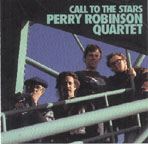
Perry Robinson Quartet "Call To The Stars" (West Wind Records)

"Coda" Magazine, September/October 1999

...It wasn't until 1986 that Robinson formed another long-term working band,a stellar quartet featuring the Russian pianist Simon Nabatov...Nabatov,who has several recordings of his own on Enja,is a fiery improviser and accompanist who brought out shades and energies in Robinson's music not previously heard...

Matthew Snyder

"Review of P. Robinson Quartet at the Knitting Factory", December 29,1995

...And when Perry finished soloing,along came Simon Nabatov to blow everyone's minds! This cat has a happening career in europe, but SOMEBODY in the U.S. has to sign him, because he could cut probably 90% of all "name" pianists. And he does classical too!...

Matthew Snyder

Ray Anderson Quartet "Every One Of Us" (Gramavision)

"Down Beat" ****, December 1992

...The redoubtable duo (Ch.Haden and Ed Blackwell) is at it's classiest, and Nabatov is a comer with his own ideas...

Howard Mandel

"Shall we dance " (2nd Floor Edition)

"Lichtung" #4, October 1999

Leidenschaftlich läßt der...Virtuose seine Finger auf der Tastatur seines Flügels tanzen. Dreht, wirbelt, hält inne, um zart und innig den Brahms'schen Walzer op. 39 auf eigene Weise auszudeuten. Gleichermaßen eigenwillig und emphatisch nähert er sich Tanzstücken Bachs, Chopins und Prokofieffs, variiert sie inspiriert und voller Feuer und steht damit seinem berühmteren Kommilitonen Ivo Pogorelich in nichts nach. Ungewöhnlich ist die Bearbeitung der Melodie einer südindischen Tempelprozession für Solopiano. Zusammen mit drei eigenen Kompositionen "ein Tanzvergnügen der besonderen Art.

Michael Scheiner

"Jazz Podium", December 1999

Nabatov, Grenzgänger zwischen komponierter und improvisierter Musik, fordert zu einem Gang durch seine Musikweit auf, und dies, wie schon der Titel sagt, auf leichte und unübliche Art für einen Schüler des Moskauer Konservatoriums: "Shall We Dance?"... Eine nicht nur intelligente, sondern sehr einfühlsame und brillante Kombination seiner eigenen Ideen im Zusammenhang mit den großen Werken der klassischen Musikliteratur entwickelt er...und präsentiert noch ein musikalisches und tänzerisches Selbstporträt ("Simple Simon") im Dialog mit der Musik Afrikas, das Keith Jarrett neidisch machen könnte.Insgesamt ein sehr überzeugendes Porträt der Welt des Simon Nabatov.

Hans-Jürgen von Osterhausen

"For All The Marbles" (ASP Records)

"Stadt Revue", April 1992

Eine ebenso brilliante Einspielung wie das Solo-Album des Pianisten ("Loco Motion").Im Trio begleiten ihn Mark Helias (b) und Barry Altschul (dr).Sie spielen überwiegend sehr spannungsreiche,boppig-groovige Titel,verstehen es aber auch,prächtig gekonnte Klangteppiche zu knüpfen (z.B. in "Phobia").Unbedingt hörenswert!

Stephen Mertens

"Jazz Podium", April 1991

...Diese Aufnahme zeigt den Absolventen des Moskauer Konservatoriums und der New Yorker Juilliard School von seiner allerbesten Seite: Nabatov ist nicht nur ein virtuoser Instrumentalist, sondern auch ein ambitionierter Komponist... Improvisation, harmonische und rhythmische Struktur fließen so eng zusammen, daß es fast unmöglich erscheint, die improvisatorischen Elemente von den auskomponierten Passagen zu unterscheiden... Die Triobesetzung bringt die Qualitäten Nabatovs am Besten zur Geltung, hier kann er den Eindruck vermitteln, der entsteht , wenn man ihn "live" hört...

Peter Schlebusch

Nils Wogram Quartet " Speed Life" (Enja)

"Jazz Zeitung"

....Auf der aktuellen Einspielung seines jungen Quartetts mit dem exzeptionellen Simon Nabatov am Piano zeigt sich Wogram ganz von seiner abgedreht-experimentellen Seite.... Dass sich auch immer wieder starke Anklänge an die Moderne Klassik einstellen, hat vor allem mit Simon Nabatov zu tun, der hier zu hundert Prozent seine musikalische Sozialisation zwischen Moskauer Konservatorium, dem Mississippi Jazz-Club in Rom und der New Yorker Szene einbringen kann. Mit der Inspiration des wahrhaft Besessenen lässt Nabatov, der letztes Jahr live an der Seite des Saxophonmisten Arthur Blythe zu bewundern war, Be Bop, Stride-Reminiszenzen (Wograms "Newsed", mit seinem cool-jazzigen Thema), impressionistische Voicings, Spätromantizismen und expressionistischen Tasten-Donner ineinanderfliessen...

Claus Lochbihler

mail: simon@nabatov.com

home | biography | discography | current events and projects | what they say... | links | contact and booking | downloads

take it to the top